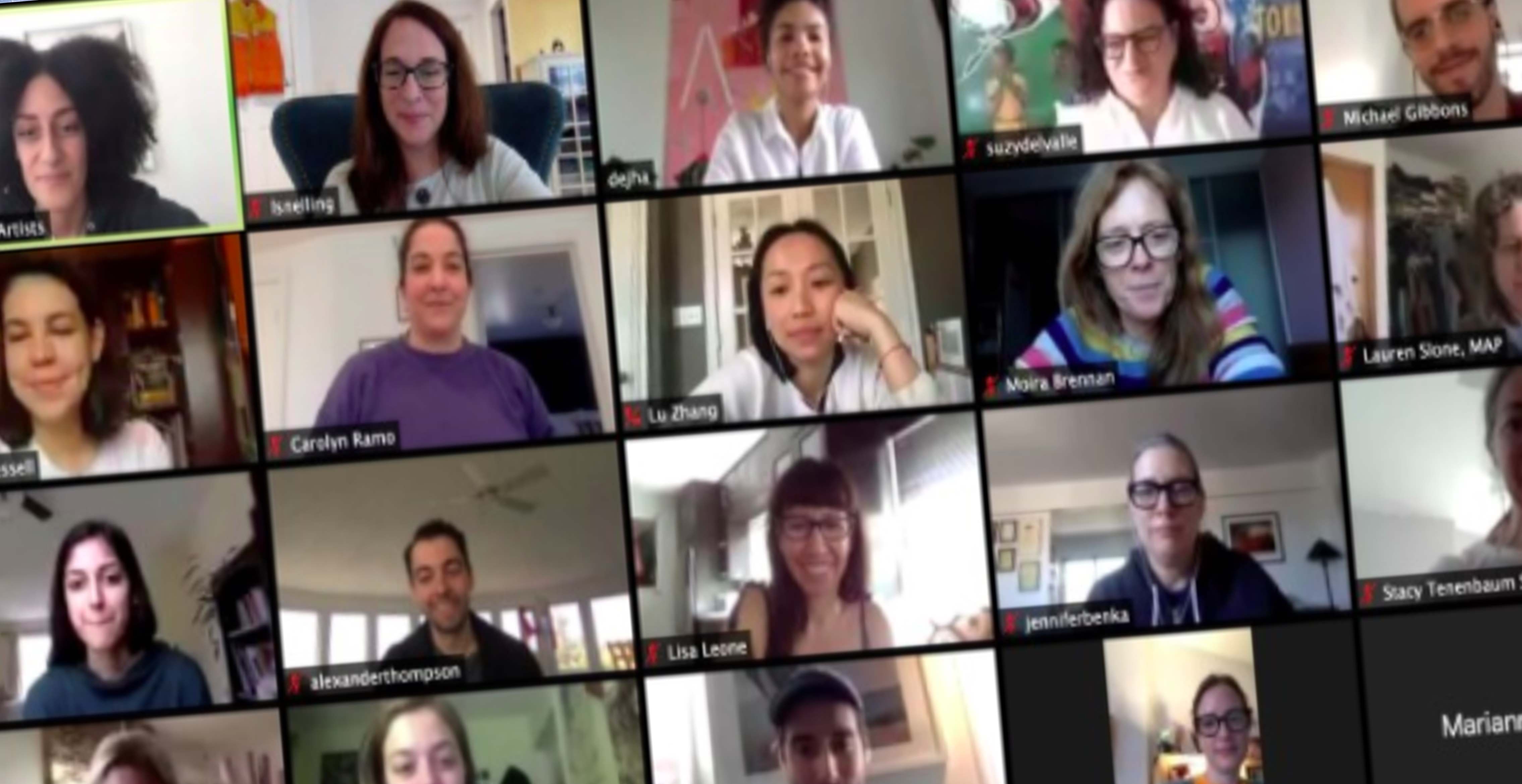
Lucky encounters, awesome conversations.
Sunday 5 Mar, from 7 to 7.45 pm (London, UTC).
12 participants max. Fee for 45 minutes: Free.
Online Zoom meeting. Register in advance here. After registering, you will receive a confirmation email containing information about joining the meeting.
Are you researching, facilitating, learning or performing improvisation, be it movement, music, play, storytelling, theatre or applied impro? Meet fellow improvisers in this free, short, online encounter and see what happen. If you have a new game you'd like to try, a problem you keep bumping into or excellent news to share, this is the place.
Remy Bertrand has spent well over 10,000 hours teaching and facilitating improvisation. Based in Monpazier, Dordogne, after 30 years in London, he has been working internationally since 2006 through Imprology, as well as in drama schools, universities, charities, and other organisations.
Over the years, he has directed large-scale improvised performances with Zootrophic, a multidisciplinary improvisation ensemble, and co-directed improvised short films with Peter Snowdon. For more than nine years in London, he also hosted Love Explosion, a monthly open-stage night where anyone could get up with a randomly chosen partner and improvise together for two minutes.
Alongside his public teaching, Remy has worked extensively with improvisation in professional training, including with senior GPs for the NHS, international banks, consultancy firms, utility companies, and the fashion industry. He remains open to challenging work, but left LinkedIn a few years ago and has never regretted it.
His training is ongoing and has included work with John Wright (Improvisation, Clown), Kate Hilder and Sten Rudstrom (Action Theatre), Mary Overlie (Six Viewpoints), Lee Simpson (Improvisation), Lucy Hopkins (Clown), and Punchdrunk (Immersive Theatre).
Remy often says that his greatest teachers have been his students. He is less interested in teaching people how to perform “correctly” than in creating the conditions for curiosity, courage and pleasure, to generate genuine encounters. For him, improvisation is not just a performance technique but a way of exploring how we respond to others, and how we stay available when we do not know what comes next.
Many of the people he has worked with have gone on to become performers, directors, teachers, and facilitators, while others have taken improvisation into psychotherapy, community work, corporate training, film, music, and social projects.