
Radical Embodied Improvisation, a manifesto.
Improvising together, growing together, we got lost in the woods to get rid of the jokes, the rush to make meaning and all the other tricks that protect us from being seen. It wasn't always possible.We started doing something else the moment we knew what we were doing. We didn't want to know. We wanted to learn. We met a few like us. A home from home.
Not Knowing
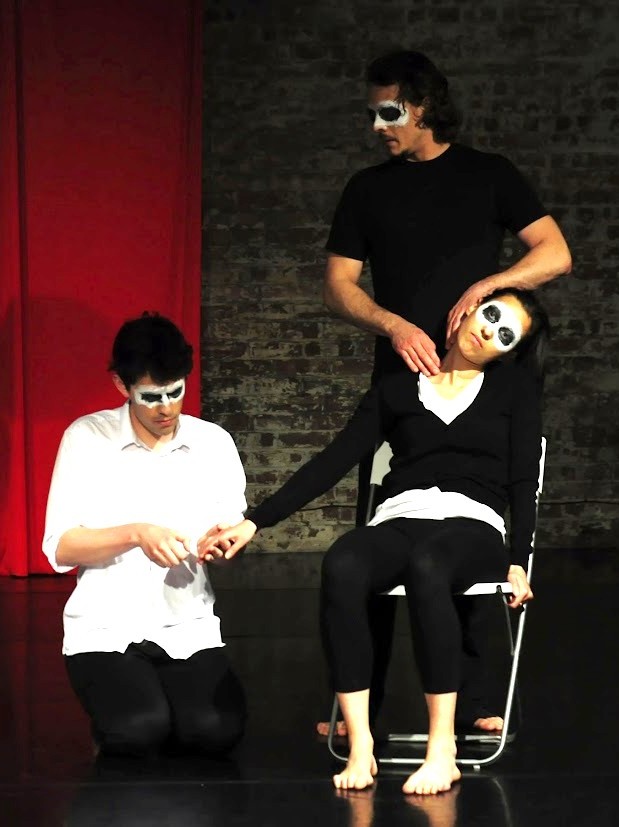
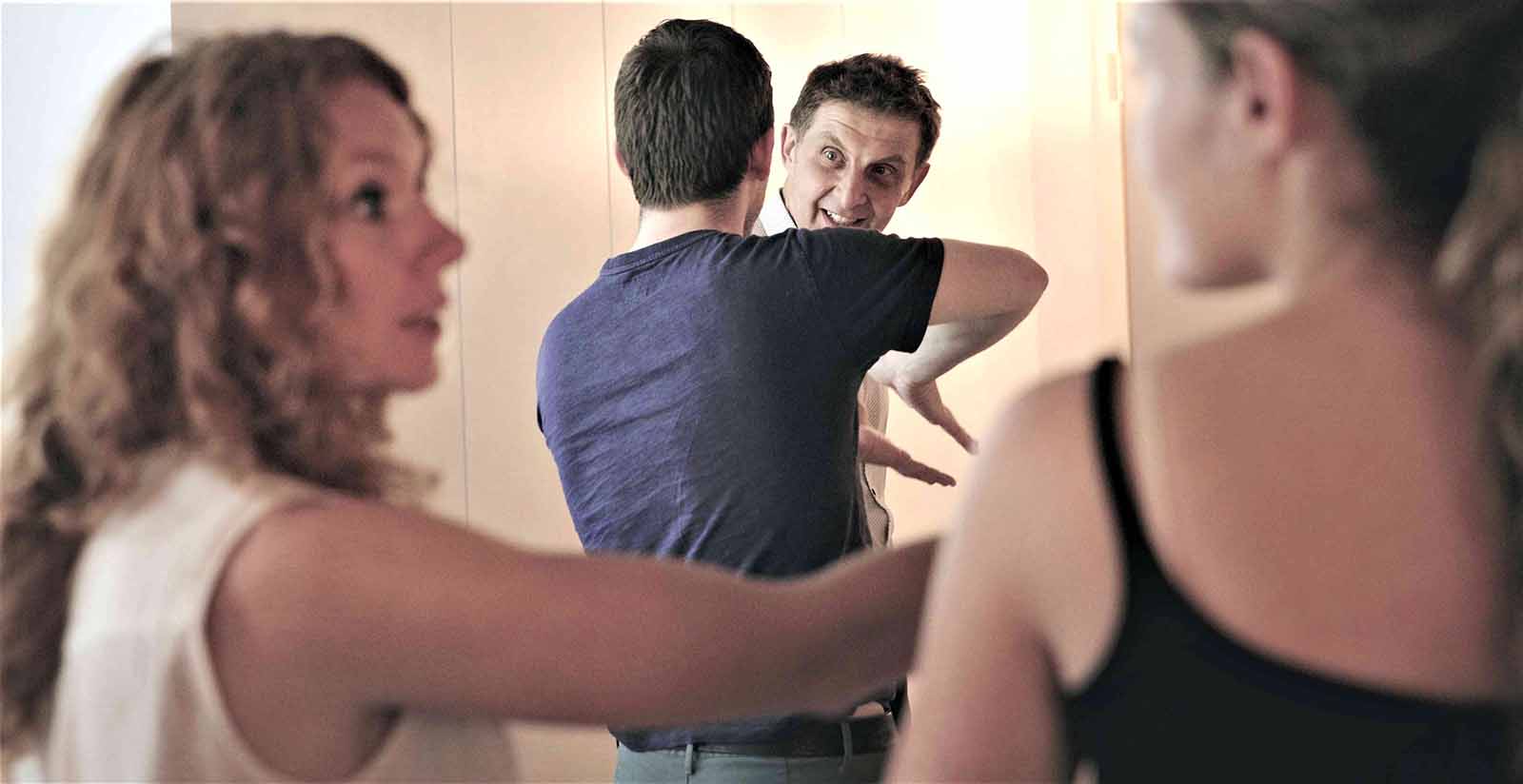
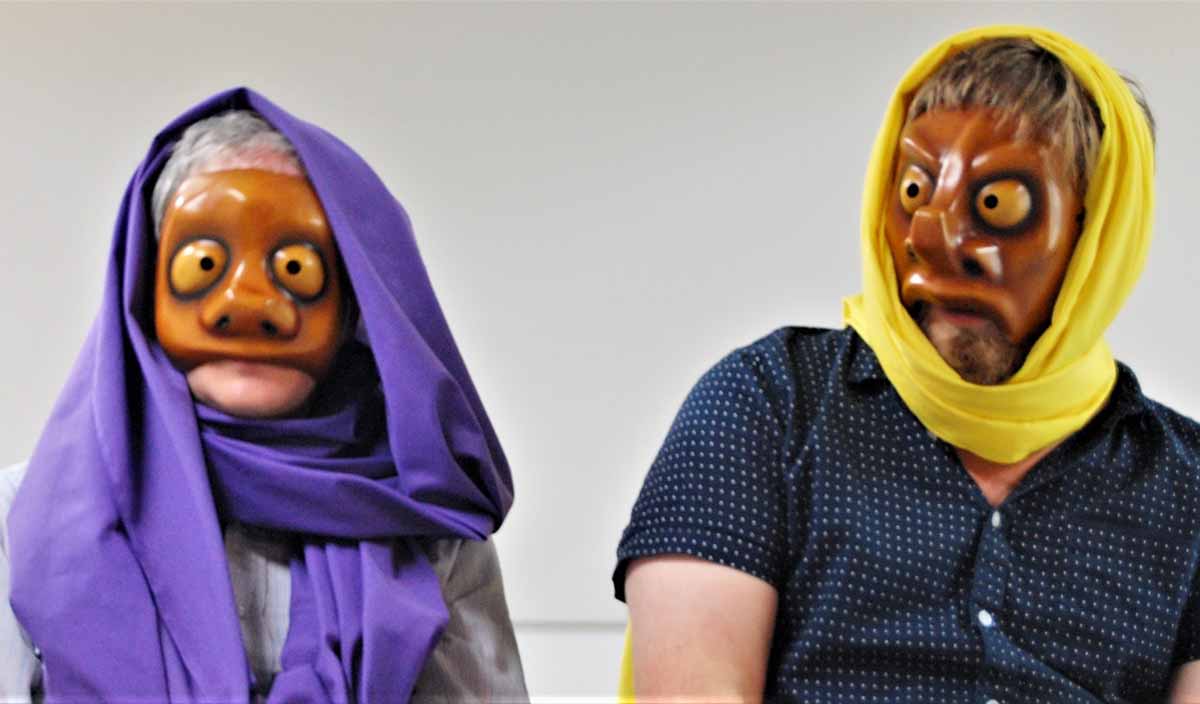
Radical Embodied Improvisation is a form of narrative abstraction using movement, words, music and masks. Simple rules generate actions; actions create consequences, and consequences unfold into stories, big and small. No one knows where it's going until it has arrived. The game is to favour connection over content.
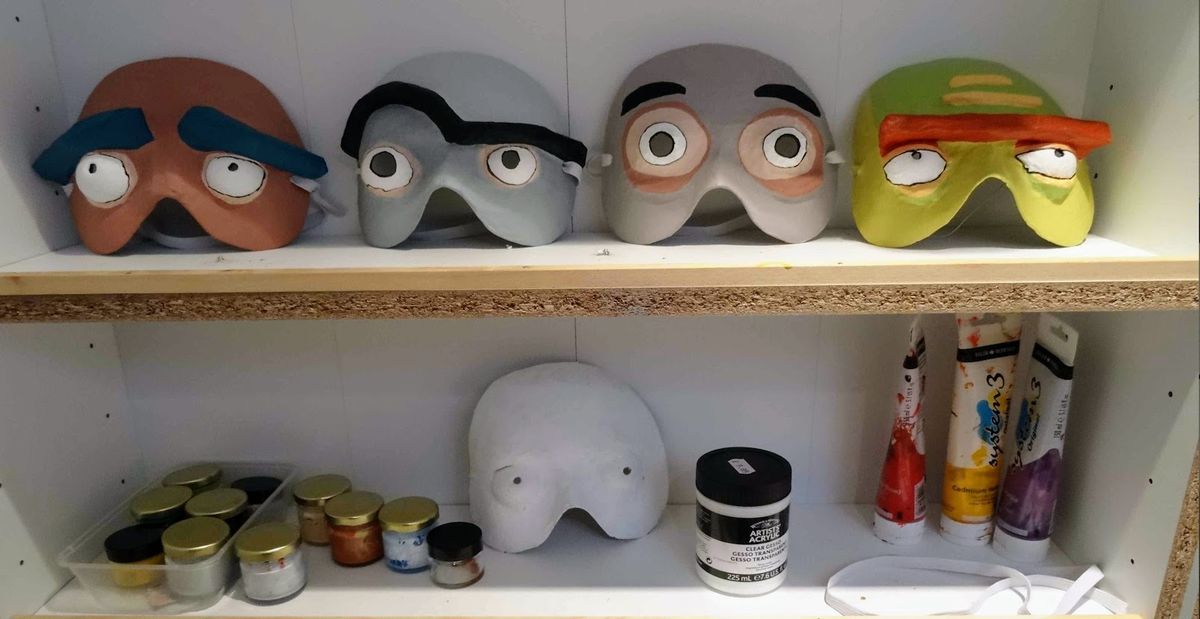
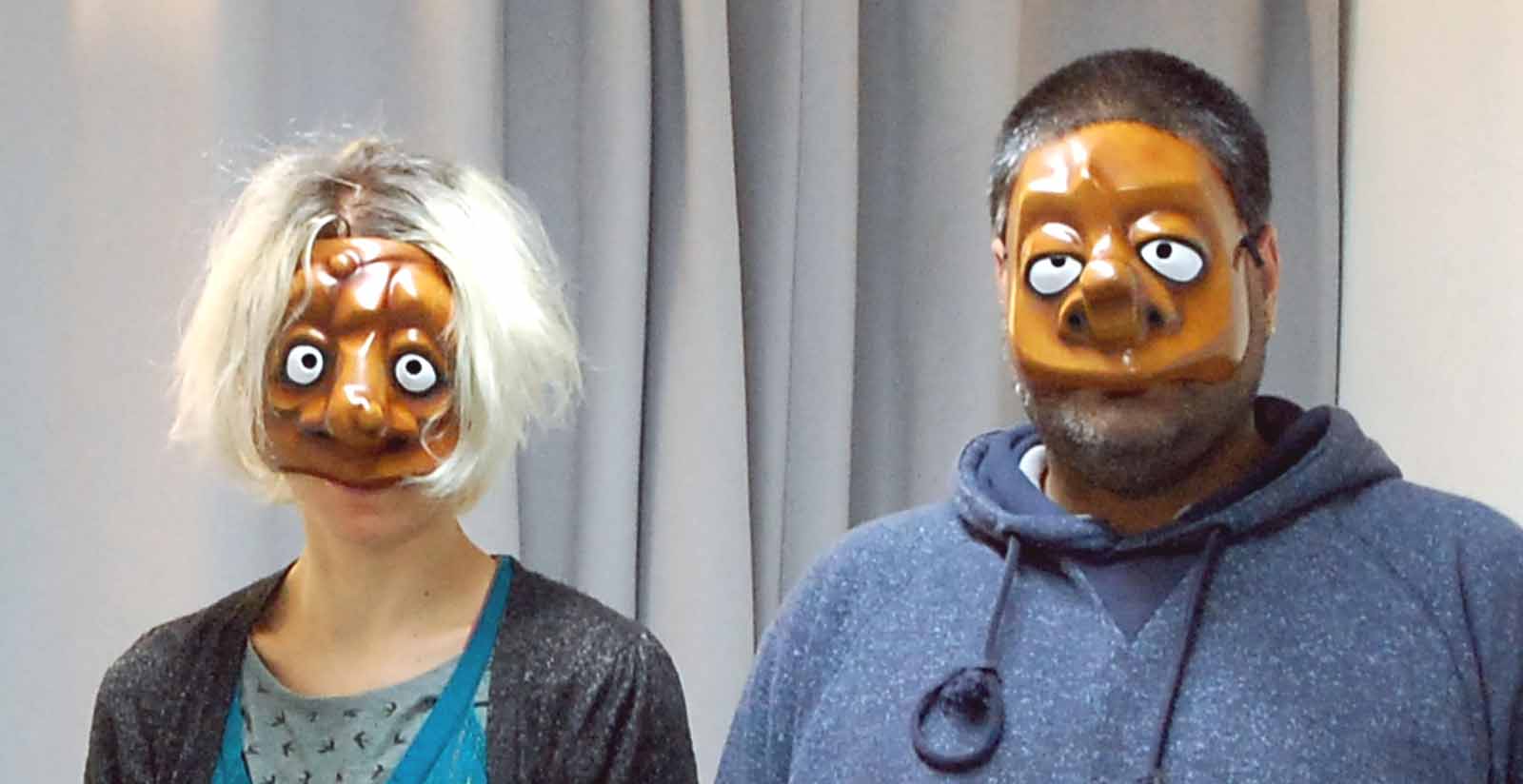
Mask building, Remy Bertrand, London, 2017.
When we come on stage with nothing, we have to pay close attention to our surroundings and make space for one another. When we treat silence as a friend, without reaching too quickly for proven formulas, we discover possibilities we had not yet envisaged, and worlds we didn't know existed.
Arrival
Many people arrive in this space carrying tension, apprehension, loneliness or exhaustion. None of it needs fixing before we begin. We take the time to arrive. We watch what we're doing. As Moshé Feldenkrais put it, "you can do what you want when you know what you're doing". Breathing goes a long way. Relief is not separate from the work. Sometimes, relief is the work.
Presence
Presence is a way to look, listen, and notice rather than rush into interpretation. It is the opposite of gossip. We spend time feeling rather than thinking, which slows down automatic behaviour and interrupts the reflex to comment, control or deflect. Sometimes the most intelligent thing a performer can do is make space for someone else, shaping the scene through presence alone.
Dishabituation
Expectations shape what we see. Attention filters what reaches our awareness. Beliefs influence what we notice, how we interpret it and what we later remember. Experience makes us better at seeing and worse at looking. We only see what we saw.
In improvisation, this happens when we attend to the scene rather than to our partners. The moment content takes precedence over connection, we organise perception around what we think the scene means. We notice what confirms that interpretation, overlook what does not, and become less responsive to what is actually happening between us.
Dishabituation interrupts recognition. It creates white space where something original, born in the moment, can emerge. In Radical Embodied Improvisation, this might mean:
- speaking in stream of consciousness
- moving in ways we have never moved before
- holding deep, genuine conversations in gibberish
- dancing without illustrating the music
- giving heartfelt rather than generic feedback
- following simple formal rules without deciding what they mean
- working from sensation rather than explanation
- letting rhythm, movement or space generate relationship rather than illustrate it
Awareness
Improvisation finds us where we are and demands that we sense where everyone else is. We are ready when everyone in the session is aware of everyone else, and sometimes that moment never comes. But when it does, the burden of having to make something up evaporates. Meaning emerges effortlessly. The work becomes both lighter and deeper. For an audience, simply watching people attend to one another at this level can be magical, regardless of what happens.
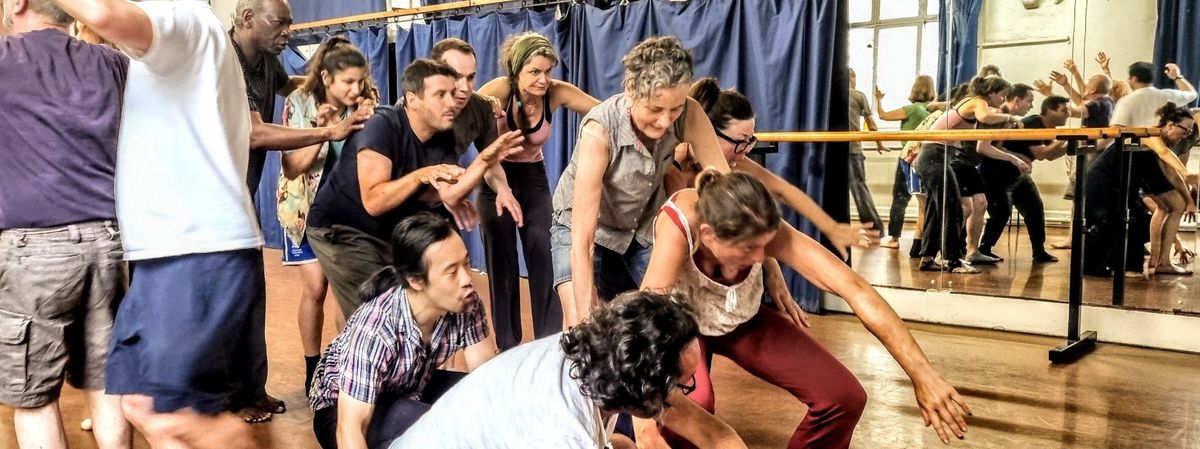
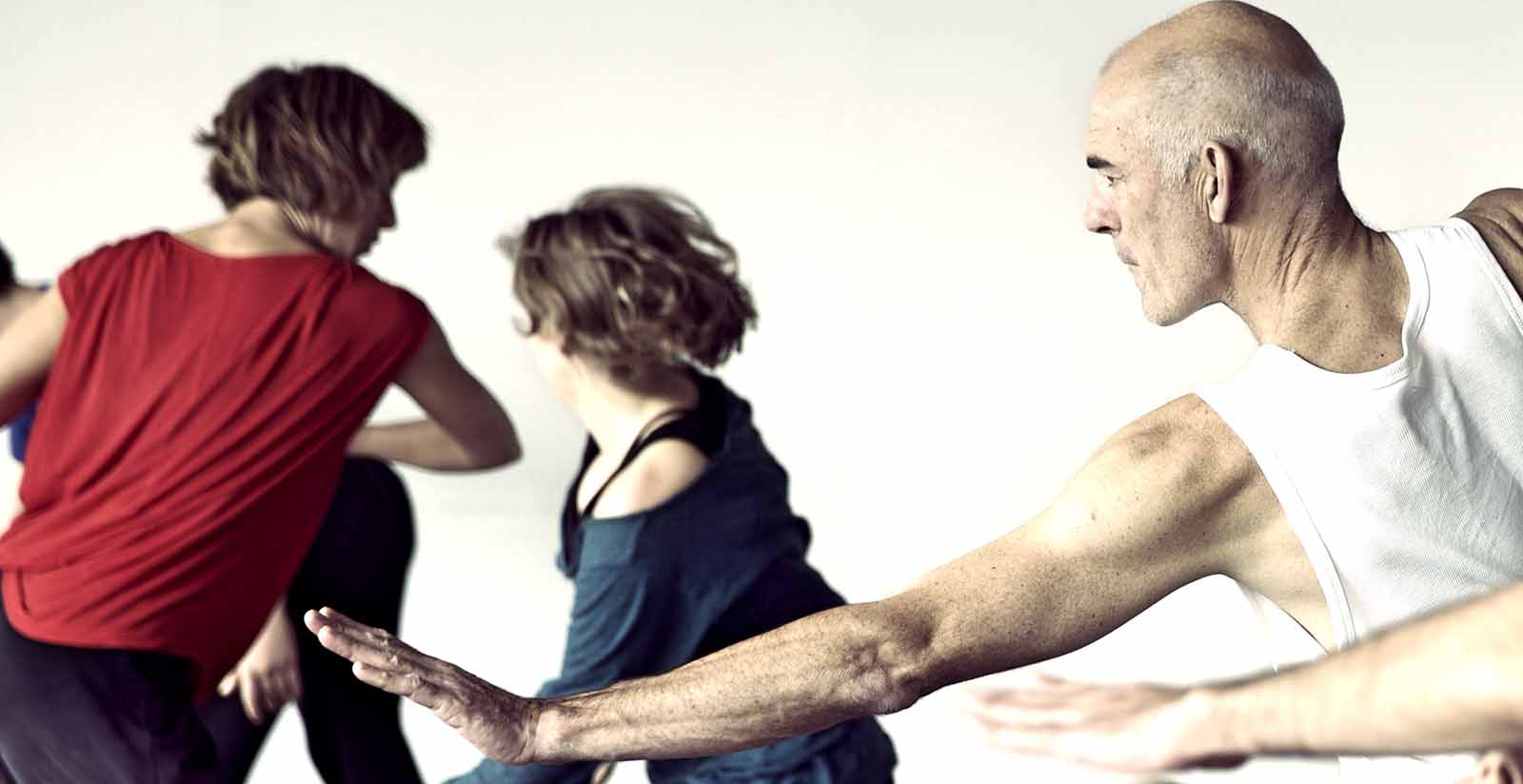
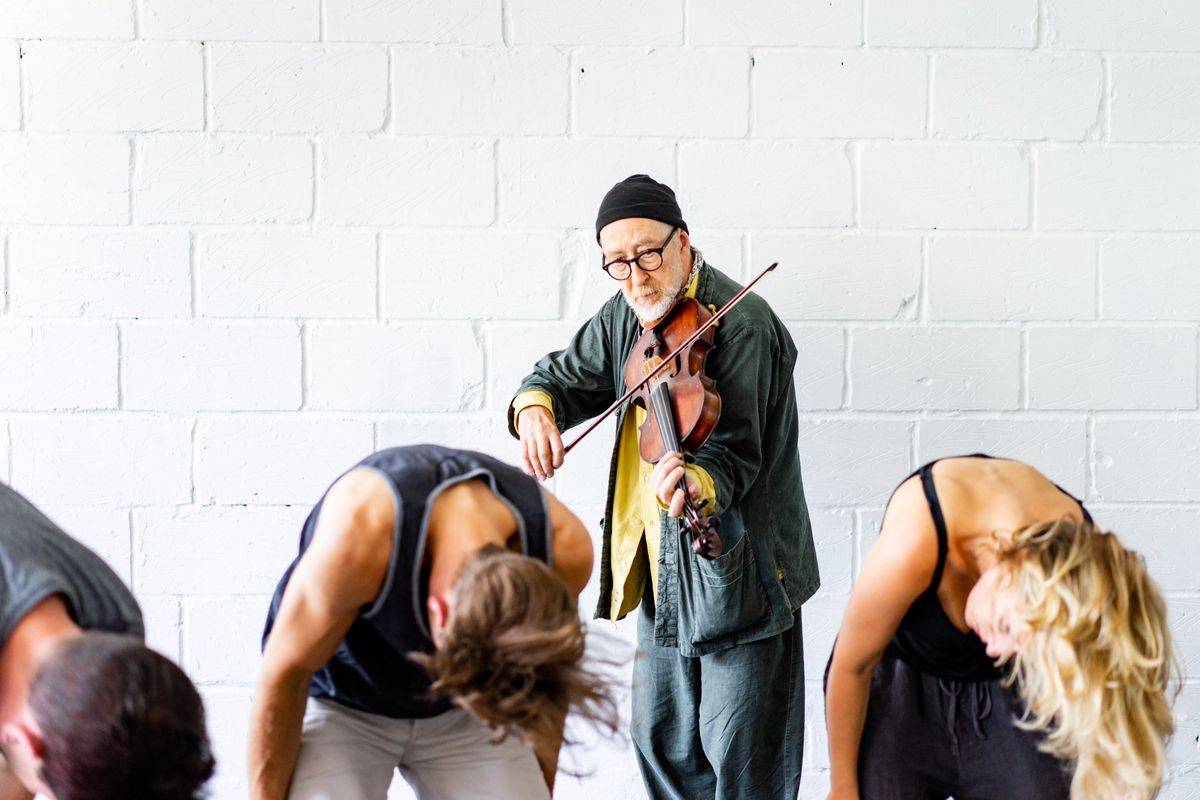
Embodied improvisation workshop by imprology, London, 2022.
Forgiveness
Improvisation is the art of surrendering, and it is very brave to stay true to uncertainty, but most improvisers would rather be fake: over the top on stage or sticking to habitual discourses, games and teams. Because failure is deeply, instinctively repulsive to us, and we'll do all that we can to stay safe. Yet failure is a constant companion in improvisation, and it is tempting to blame ourselves for resisting change, which makes us resist change even more. In order to exorcise the habit and stay curious, regardless, we envisage improvisation as a school of compassion and forgiveness. Now we can let failure teach us that flopping is survivable, audiences forgive faster than we do, and courage only takes practice.
Spontaneity
Most social situations reward control and consistency over creativity. With time, we learn to present a stable character to the world: competent, agreeable, rebellious, intelligent, wounded, funny, calm. We repeat the behaviour that keeps us acceptable to others and eventually take this for identity. In the end, our personalities are less a creative expression of freedom than a survival strategy. Mostly show business.
Improvising makes transformation possible once more. In that space, we can find pleasure in others without denying our own subjectivity. Since we are playing inside a simulation, we are free to explore the best and worst of humanity with no consequences in the real world. Our interactions can be foolish, cruel, heroic, needy, ridiculous, seductive, cowardly or average, without having to defend these choices as personal statements. This is play, the closest an adult can be to freedom. If in this particular moment in time, spontaneity feels impossible, there is no need to pretend otherwise. We can begin by sensing where we are and dancing with what we have, even if it is very little. This, too, is the work.
Permission
To serve an ensemble, you have to want to be there. To really be there, you have to be free to withdraw your participation at any time, without condition or justification. Dynamic consent is key. Every participant should know that they can leave the performing space and return whenever it suits them.
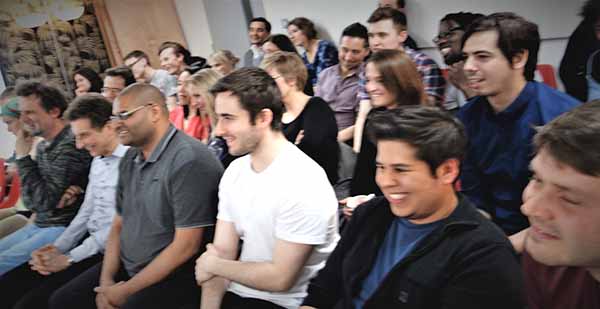
The worlds we build are both collaborative and spontaneous, governed by rules negotiated in real time between performers, characters and audiences (yes, even a silent audience shapes the performance). But first comes call and response, reactions and counter-reactions. Only then can meaning emerge. The people who find improvisation really hard are often those trying to put meaning before action.
This is the dance: watching, listening, negotiating. The action remains fluid as long as we never stop watching and listening. If an impulse arises from within, the choice is to act on it immediately or let it go entirely, before thought turns into hesitation and hesitation into regret. It is now or never. When an impulse comes from without, it is an invitation to dance to someone else's tune and free ourselves from the illusion of control. And when it is born from the whole group, carried by the whole group, with an origin impossible to trace, that is what we live for.
Zootrophic film shoot, London, 2018.
Participants are not expected to override all their limits for the sake of the performance, the group or the process. A healthy ensemble is not built through obedience or self-erasure, but with people who can remain simultaneously present, exposed, and capable of making choices. Speaking from experience, this attitude must be cultivated if it is to go beyond aspiration. The work depends less on harmony than on people's capacity to stay responsive to one another amid constant change.
Provocation
The instinct that keeps us smooth and polite in good society follows us onto the stage as we improvise, but all stories are about transgression. Sooner or later, someone has to cross a line that cannot be uncrossed. Here, transgression does not necessarily mean doing something immoral, shocking, or extreme. The boundary might be social, emotional, relational, or practical, but big or small, the line has to be crossed. We know this instinctively, too, which is why so many improvisations so quickly become domestic disputes. If we are after something more original, we are going to have to take our time and spend a bit longer in the unknown: provocation should arise naturally. So how is this supposed to happen if we are to let things unfold?
Every attempt at communicating is already a provocation of sort. Even if we aren't aware of it, each time we interact, we invite, disturb, reassure, challenge, or redirect each other's attention. Otherwise, why communicate at all?
Provocation doesn't have to be loud or intentional. We might not even notice that we have been provocative, yet someone else is affected, and their reaction, rather than our intention, is what moves the story forward, provided that we resist the urge to smooth the disturbance over too quickly. Let the awkwardness remain, and let the consequences gather strength.
Transgression doesn't need to come from somebody deciding that now is the time to make something happen. It can come from pursuing what is already there a little further. Paradoxically, to reach this point of no return, we have to resist the urge to get anywhere.
Only when we get stuck in a rut for good should we use deliberate provocation to regenerate the action. This sits uneasily with the philosophy of letting things happen and should remain exceptional. Force the movement too often and the collective intelligence dissipates like morning fog on a pond.
Freedom
Radical Embodied Improvisation is, indeed, improvised. No parlour tricks. No intention for the day (why oh why come to this space if it's to smell our own fart?). No archetype. No hero’s journey. No underlying irony. No insider references. Nothing but time and space.
Radical Embodied Improvisation is risky, deep, compassionate, and fun. Self-regulating chaos. Sublime incompetence. Self-forgiveness for breakfast. A listening machine. What you do with it is up to you. Build communities. Have a ball. Learn to breathe. Become slow to judge. Find beauty everywhere. Dismantle patriarchy. Demystify your own bullshit. Get a life. The list is endless.
The joy of a collective breath, stronger, deeper and more inventive than our own alone.
Radical Embodied Improvisation, a manifesto.
Improvising together, growing together, we got lost in the woods to get rid of the jokes, the rush to make meaning and all the other tricks that protect us from being seen. It wasn't always possible.We started doing something else the moment we knew what we were doing. We didn't want to know. We wanted to learn. We met a few like us. A home from home.
Not Knowing
Radical Embodied Improvisation is a form of narrative abstraction using movement, words, music and masks. Simple rules generate actions; actions create consequences, and consequences unfold into stories, big and small. No one knows where it's going until it has arrived. The game is to favour connection over content.
Mask building, Remy Bertrand, London, 2017.
When we come on stage with nothing, we have to pay close attention to our surroundings and make space for one another. When we treat silence as a friend, without reaching too quickly for proven formulas, we discover possibilities we had not yet envisaged, and worlds we didn't know existed.
Arrival
Many people arrive in this space carrying tension, apprehension, loneliness or exhaustion. None of it needs fixing before we begin. We take the time to arrive. We watch what we're doing. As Moshé Feldenkrais put it, "you can do what you want when you know what you're doing". Breathing goes a long way. Relief is not separate from the work. Sometimes, relief is the work.
Presence
Presence is a way to look, listen, and notice rather than rush into interpretation. It is the opposite of gossip. We spend time feeling rather than thinking, which slows down automatic behaviour and interrupts the reflex to comment, control or deflect. Sometimes the most intelligent thing a performer can do is make space for someone else, shaping the scene through presence alone.
Dishabituation
Expectations shape what we see. Attention filters what reaches our awareness. Beliefs influence what we notice, how we interpret it and what we later remember. Experience makes us better at seeing and worse at looking. We only see what we saw.
In improvisation, this happens when we attend to the scene rather than to our partners. The moment content takes precedence over connection, we organise perception around what we think the scene means. We notice what confirms that interpretation, overlook what does not, and become less responsive to what is actually happening between us.
Dishabituation interrupts recognition. It creates white space where something original, born in the moment, can emerge. In Radical Embodied Improvisation, this might mean:
- speaking in stream of consciousness
- moving in ways we have never moved before
- holding deep, genuine conversations in gibberish
- dancing without illustrating the music
- giving heartfelt rather than generic feedback
- following simple formal rules without deciding what they mean
- working from sensation rather than explanation
- letting rhythm, movement or space generate relationship rather than illustrate it
Awareness
Improvisation finds us where we are and demands that we sense where everyone else is. We are ready when everyone in the session is aware of everyone else, and sometimes that moment never comes. But when it does, the burden of having to make something up evaporates. Meaning emerges effortlessly. The work becomes both lighter and deeper. For an audience, simply watching people attend to one another at this level can be magical, regardless of what happens.
Embodied improvisation workshop by imprology, London, 2022.
Forgiveness
Improvisation is the art of surrendering, and it is very brave to stay true to uncertainty, but most improvisers would rather be fake: over the top on stage or sticking to habitual discourses, games and teams. Because failure is deeply, instinctively repulsive to us, and we'll do all that we can to stay safe. Yet failure is a constant companion in improvisation, and it is tempting to blame ourselves for resisting change, which makes us resist change even more. In order to exorcise the habit and stay curious, regardless, we envisage improvisation as a school of compassion and forgiveness. Now we can let failure teach us that flopping is survivable, audiences forgive faster than we do, and courage only takes practice.
Spontaneity
Most social situations reward control and consistency over creativity. With time, we learn to present a stable character to the world: competent, agreeable, rebellious, intelligent, wounded, funny, calm. We repeat the behaviour that keeps us acceptable to others and eventually take this for identity. In the end, our personalities are less a creative expression of freedom than a survival strategy. Mostly show business.
Improvising makes transformation possible once more. In that space, we can find pleasure in others without denying our own subjectivity. Since we are playing inside a simulation, we are free to explore the best and worst of humanity with no consequences in the real world. Our interactions can be foolish, cruel, heroic, needy, ridiculous, seductive, cowardly or average, without having to defend these choices as personal statements. This is play, the closest an adult can be to freedom. If in this particular moment in time, spontaneity feels impossible, there is no need to pretend otherwise. We can begin by sensing where we are and dancing with what we have, even if it is very little. This, too, is the work.
Permission
To serve an ensemble, you have to want to be there. To really be there, you have to be free to withdraw your participation at any time, without condition or justification. Dynamic consent is key. Every participant should know that they can leave the performing space and return whenever it suits them.
The worlds we build are both collaborative and spontaneous, governed by rules negotiated in real time between performers, characters and audiences (yes, even a silent audience shapes the performance). But first comes call and response, reactions and counter-reactions. Only then can meaning emerge. The people who find improvisation really hard are often those trying to put meaning before action.
This is the dance: watching, listening, negotiating. The action remains fluid as long as we never stop watching and listening. If an impulse arises from within, the choice is to act on it immediately or let it go entirely, before thought turns into hesitation and hesitation into regret. It is now or never. When an impulse comes from without, it is an invitation to dance to someone else's tune and free ourselves from the illusion of control. And when it is born from the whole group, carried by the whole group, with an origin impossible to trace, that is what we live for.
Zootrophic film shoot, London, 2018.
Participants are not expected to override all their limits for the sake of the performance, the group or the process. A healthy ensemble is not built through obedience or self-erasure, but with people who can remain simultaneously present, exposed, and capable of making choices. Speaking from experience, this attitude must be cultivated if it is to go beyond aspiration. The work depends less on harmony than on people's capacity to stay responsive to one another amid constant change.
Provocation
The instinct that keeps us smooth and polite in good society follows us onto the stage as we improvise, but all stories are about transgression. Sooner or later, someone has to cross a line that cannot be uncrossed. Here, transgression does not necessarily mean doing something immoral, shocking, or extreme. The boundary might be social, emotional, relational, or practical, but big or small, the line has to be crossed. We know this instinctively, too, which is why so many improvisations so quickly become domestic disputes. If we are after something more original, we are going to have to take our time and spend a bit longer in the unknown: provocation should arise naturally. So how is this supposed to happen if we are to let things unfold?
Every attempt at communicating is already a provocation of sort. Even if we aren't aware of it, each time we interact, we invite, disturb, reassure, challenge, or redirect each other's attention. Otherwise, why communicate at all?
Provocation doesn't have to be loud or intentional. We might not even notice that we have been provocative, yet someone else is affected, and their reaction, rather than our intention, is what moves the story forward, provided that we resist the urge to smooth the disturbance over too quickly. Let the awkwardness remain, and let the consequences gather strength.
Transgression doesn't need to come from somebody deciding that now is the time to make something happen. It can come from pursuing what is already there a little further. Paradoxically, to reach this point of no return, we have to resist the urge to get anywhere.
Only when we get stuck in a rut for good should we use deliberate provocation to regenerate the action. This sits uneasily with the philosophy of letting things happen and should remain exceptional. Force the movement too often and the collective intelligence dissipates like morning fog on a pond.
Freedom
Radical Embodied Improvisation is, indeed, improvised. No parlour tricks. No intention for the day (why oh why come to this space if it's to smell our own fart?). No archetype. No hero’s journey. No underlying irony. No insider references. Nothing but time and space.
Radical Embodied Improvisation is risky, deep, compassionate, and fun. Self-regulating chaos. Sublime incompetence. Self-forgiveness for breakfast. A listening machine. What you do with it is up to you. Build communities. Have a ball. Learn to breathe. Become slow to judge. Find beauty everywhere. Dismantle patriarchy. Demystify your own bullshit. Get a life. The list is endless.
The joy of a collective breath, stronger, deeper and more inventive than our own alone.
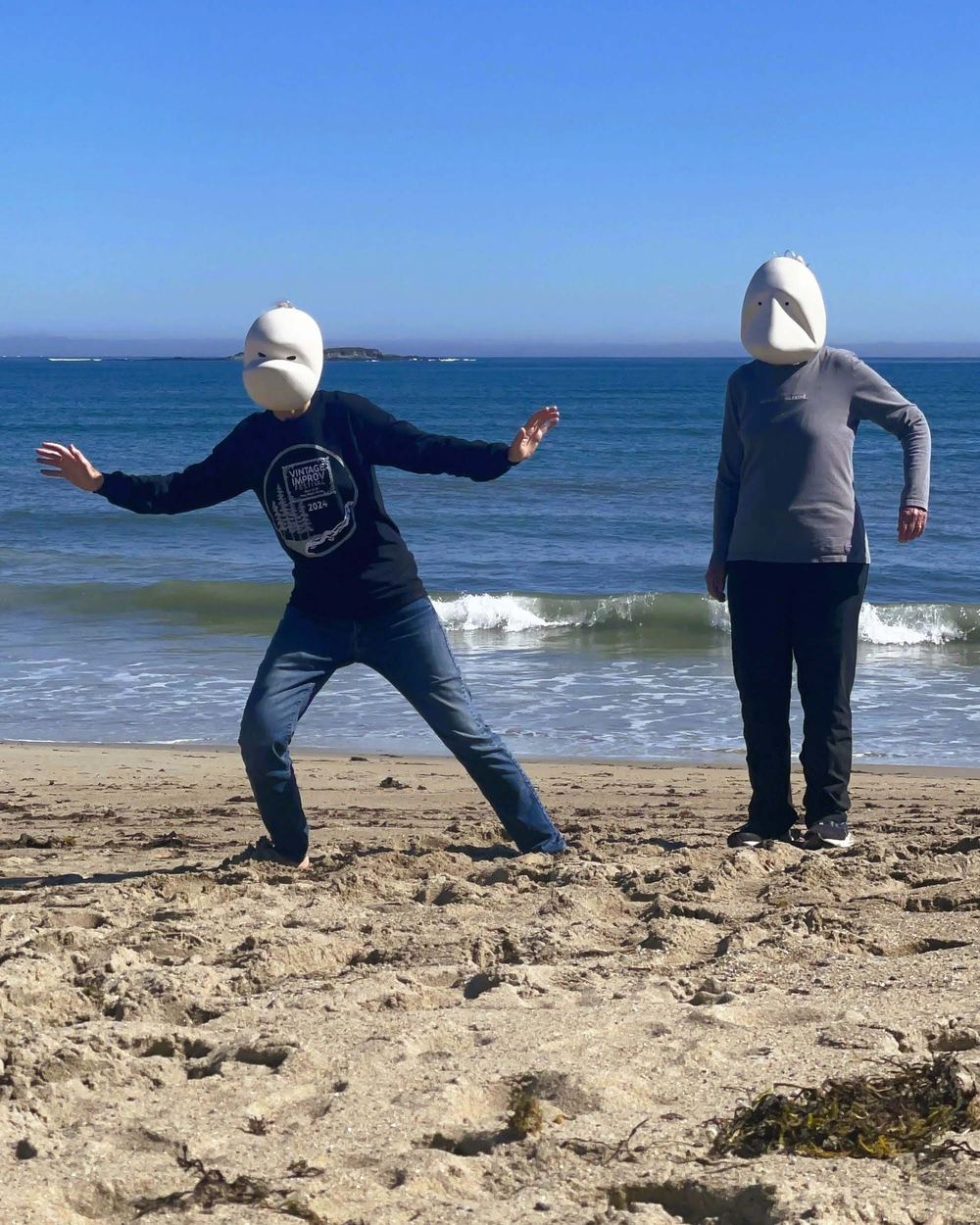
impro on the beach, imprology for Vintage Improv Festival, Maine, USA, 2024.